

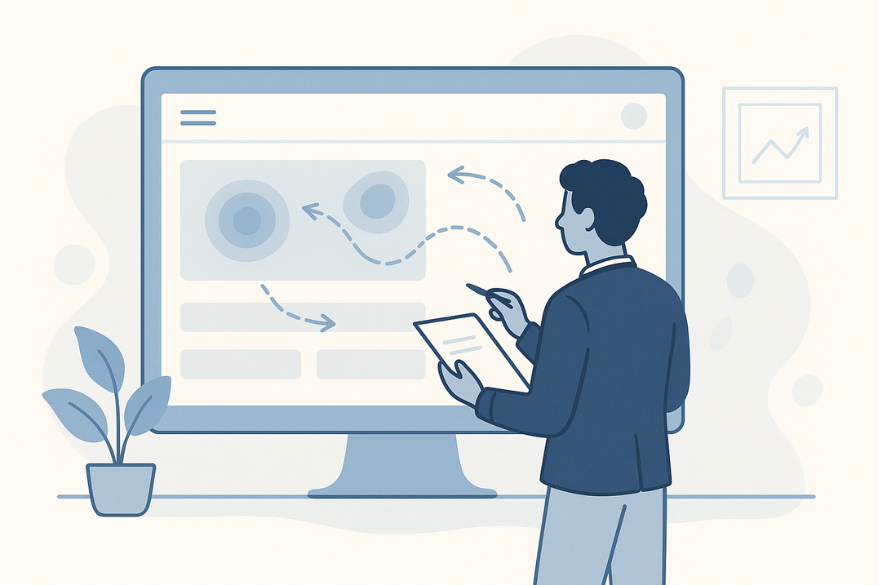
Most small businesses assume growth comes from more marketing, more traffic, or more features. But in practice, growth often comes from something much simpler, removing the friction that prevents customers from acting.
A UX audit is a structured, evidence-based review of how users actually experience your website or digital product. It identifies where people hesitate, misunderstand, or abandon the journey and provides a clear plan to fix those barriers.
This is not visual design critique. A UX audit is a business performance tool. When executed correctly, it directly improves conversion, retention, operational clarity, and customer satisfaction.
Research supports this:
- ISO 9241-210 defines human-centred design as a practice that improves system performance by aligning tools with real user needs. (ISO, 2019)
- Academic studies in HCI show that reducing cognitive friction significantly increases task completion rates and user trust. (University of Cambridge, “Designing for Usability”)
What a UX Audit Actually Does
A UX audit helps small businesses by finding the gaps between:
- What your users expect
- What your business intends
- What your product actually delivers
Unlike heuristic “design reviews,” a UX audit is systematic. It typically includes:
- Accessibility evaluation (WCAG 2.1 AA compliance)
- Information architecture and navigation structure review
- Interaction analysis: clarity, affordance, feedback
- Usability testing or session reviews
- Data-driven insights from analytics
- Conversion pathway evaluation
- Device responsiveness and mobile accessibility
- Cognitive load and content readability
This structure comes from established usability frameworks, not opinion.
Why UX Audits Drive Real Business Growth
1. They Improve Website Conversion Rates
When users cannot find the right information or feel unsure about the next step, they leave — even if the business is a perfect fit.
A UX audit identifies:
- Points where users become uncertain
- Pages with high friction
- Steps that slow users down
- Content gaps affecting decision confidence
Usability research consistently shows strong relationships between clarity and conversion. Studies from academic HCI research indicate that improving task clarity increases completion rates by up to 40%.
2. They Reduce Customer Support Load
Poor user experience creates avoidable questions:
- “Where do I find pricing?”
- “How do I book?”
- “Where do I download my invoice?”
Each unclear flow becomes a support ticket.
A UX audit exposes where information architecture or copy fails, allowing you to reduce support costs by improving clarity.
Government digital service research shows that improving service usability reduces failure demand the number of support interactions triggered by unclear experiences.
3. They Build Customer Trust Through Accessibility & Clarity
Accessibility is a legal obligation under the UK Equality Act 2010, and many SMB sites still fall short.
- A UX audit evaluates:
- Screen-reader compatibility
- Keyboard navigation
- Colour contrast
- Form label compliance
WCAG 2.1 AA accessibility requirements are internationally recognised and improve usability for all users, not only those with disabilities.
4. They Reduce Internal Guesswork
4. They Reduce Internal Guesswork
Without a UX audit, teams often rely on intuition:
- “Customers don’t like our prices.”
- “People don’t want this feature.”
- “The market is too competitive.”
But often, the issue is simply that users are confused or stuck.
A UX audit replaces assumptions with evidence:
- Heatmap data
- Interaction logs
- Abandonment points
- Usability principles
- Accessibility compliance issues
Data-driven clarity helps SMB teams take smarter, lower-risk decisions.
5. They Prepare SMBs for AI, Analytics & Automation
A digital experience that is unclear or inconsistent is extremely difficult to automate or optimise later.
This matters because:
- UK Government reports show rising adoption of digital tools and AI among SMEs.
- Businesses that digitise and modernise workflows earlier gain efficiency advantages.
A UX audit ensures your digital foundation is strong enough to support later improvements.

The UX Audit Process
Step 1: Define the Business Goal
Examples:
- Increase lead submission
- Improve checkout flow
- Reduce support tickets
- Increase mobile conversions
A UX audit is not abstract, it is directly tied to business outcomes.
Step 2: Evaluate Real User Behaviour
Using tools grounded in behavioural analysis:
- Funnel analytics
- Interaction heatmaps
- Mobile viewport rendering
- Session observation
This is not guesswork, it is behavioural science.
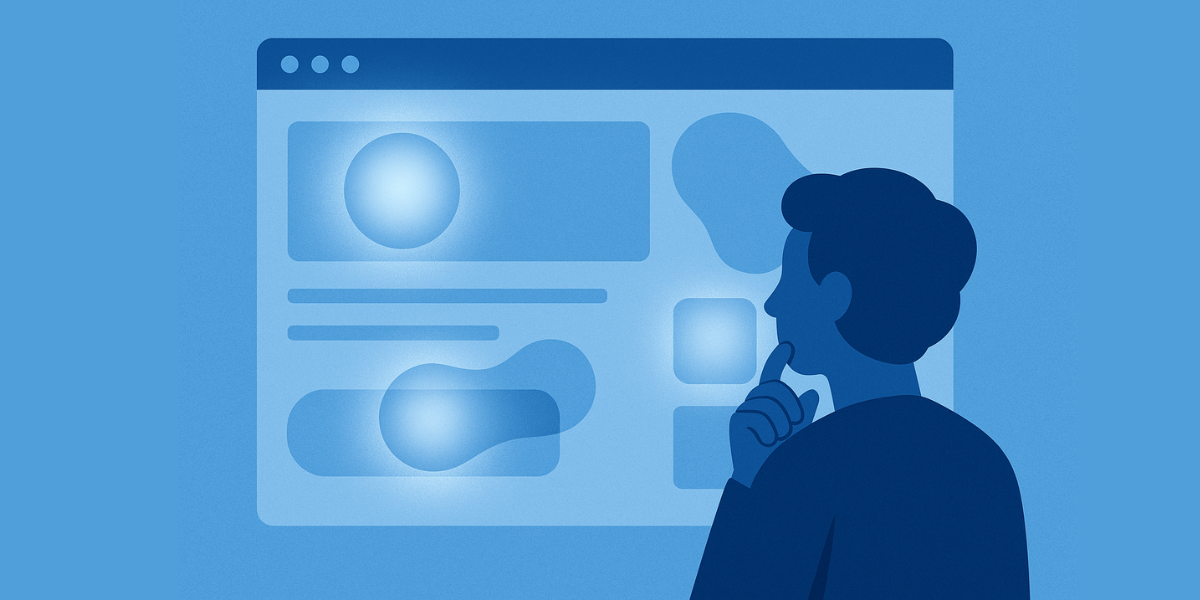
Step 3: Heuristic Evaluation (Based on Standard Frameworks)
Guided by:
- ISO 9241-210
- WCAG 2.1
- Nielsen-inspired usability principles (measurable & testable)
This reveals friction in interaction design, structure, clarity, and language.
Step 4: Identify High-Impact Fixes
The best UX audits highlight:
- Quick wins (copy, clarity, alignment, layout)
- Structural issues (navigation, architecture)
- Critical blockers (mobile usability, error states)
And they prioritise changes by business impact, not design preference.
Step 5: Deliver a Clear Action Plan
A UX audit should end with a structured roadmap:
- Immediate changes (0–30 days)
- Medium-term improvements (30–90 days)
- Strategic enhancements (90+ days)
This makes it actionable and cost-predictable, ideal for SMBs.
Conclusion
UX audits help small businesses grow because they align your digital experience with:
- How users think
- What they need
- How they decide
- How they trust
They turn hidden friction into clear opportunity, giving SMBs a competitive advantage without major redesigns or costly rebuilds. A UX audit is not a design exercise, it is a business clarity exercise.
At I-Net Software Solutions, we help UK SMBs understand exactly where their digital experience is underperforming and what to fix first.
If you want to see where your friction points, clarity issues, and conversion blockers actually are, we offer a UX Audit Consultation to give you actionable, priority-based improvements.