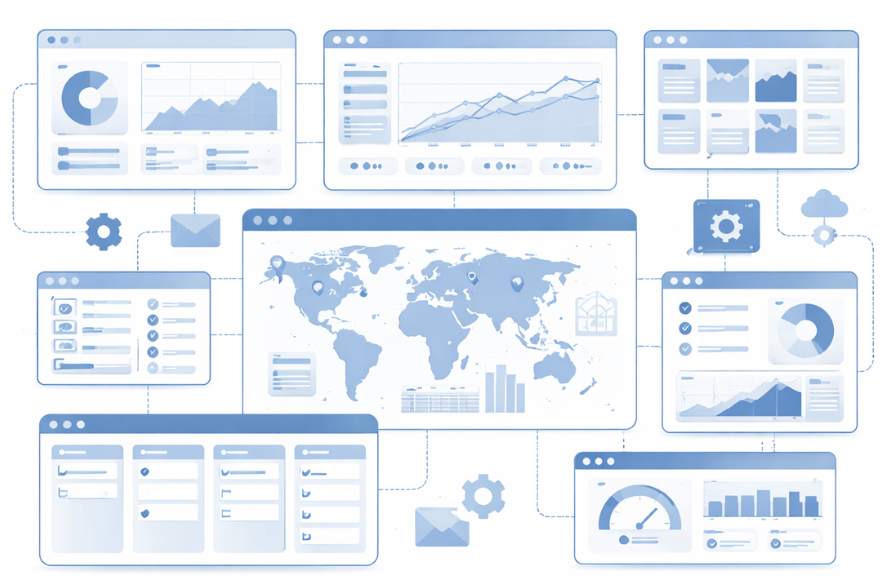

Increasingly, small and medium-sized businesses are discovering that AI can improve operational efficiency, automate routine tasks, and support better decision-making. This shift reflects a broader transformation in the digital economy.
Adoption of advanced digital technologies, ncluding artificial intelligence is expected to drive productivity and economic growth across UK industries. For SMEs, the real question is not whether AI will matter, but where it delivers practical value today. Understanding how AI can support everyday operations is the first step toward responsible adoption.
Why AI Is Becoming Accessible to SMEs
Historically, AI implementation required large datasets, specialist engineering teams, and expensive infrastructure.
That barrier is rapidly shrinking.
Cloud-based AI platforms and automation tools now allow businesses to integrate intelligent capabilities without building complex systems internally. Microsoft notes that cloud technologies are accelerating access to advanced analytics and AI capabilities for organisations of all sizes.
For SMEs, this means AI is increasingly deployed through:
- cloud platforms
- workflow automation tools
- embedded AI in business software
- analytics systems
The result is not artificial intelligence as a research project, but AI embedded into operational workflows.
1. Automating Routine Business Processes
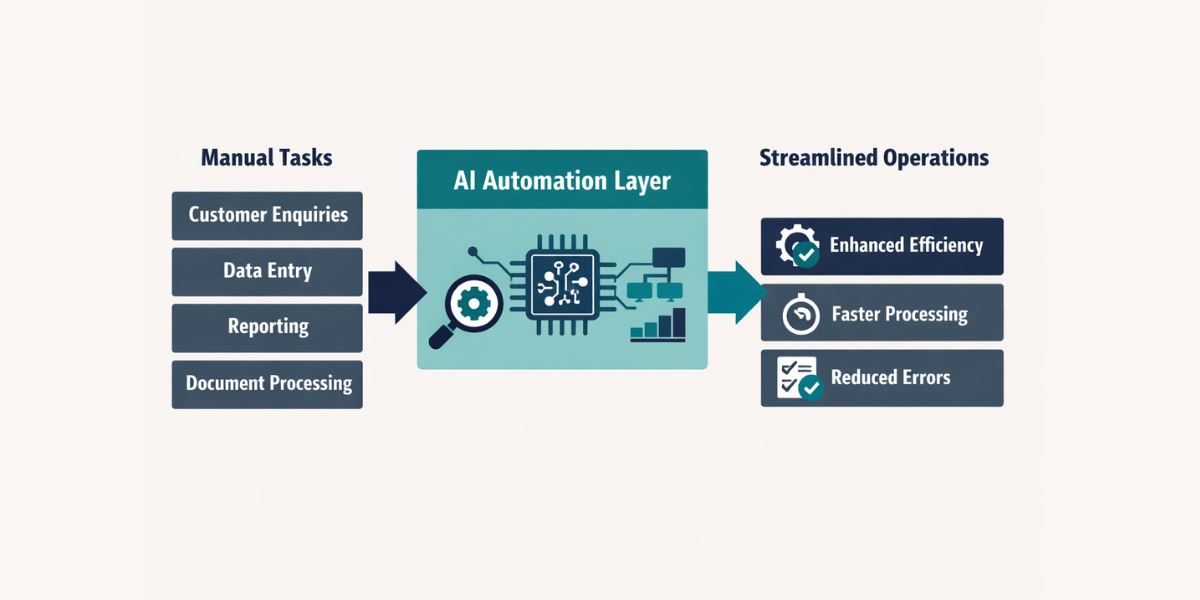
Many SME operations involve repetitive tasks that consume valuable time. AI-driven automation allows businesses to streamline these processes, freeing teams to focus on higher-value work.
Common automation opportunities include:
- processing customer enquiries
- routing support requests
- document classification
- invoice processing
- internal reporting
Automation does not eliminate human oversight. Instead, it improves efficiency by allowing teams to concentrate on complex decision-making rather than routine administration.
Research from McKinsey suggests that automation technologies could automate a significant share of current workplace activities across industries.
2. Improving Customer Insights and Data Analysis
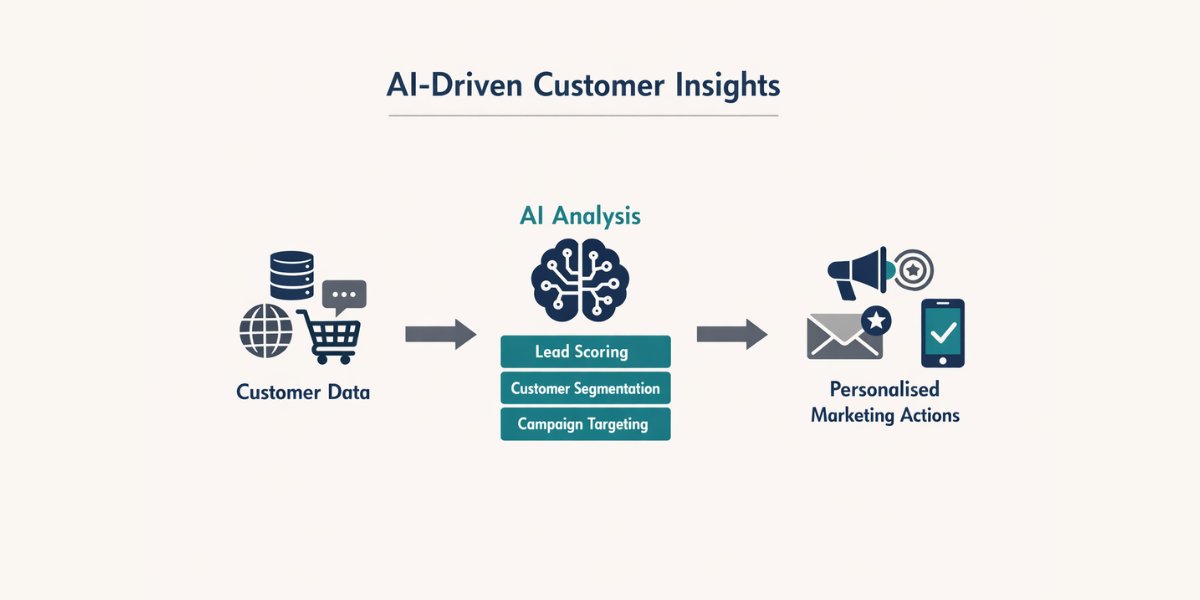
Most SMEs already collect valuable business data, through sales systems, marketing platforms, and customer interactions. However, data alone does not produce insight. AI-powered analytics tools help organisations identify patterns, forecast trends, and understand customer behaviour more effectively.
According to the OECD, data-driven innovation is becoming a key driver of productivity and competitiveness across economies.
For SMEs, AI can support:
- customer segmentation
- demand forecasting
- product performance analysis
- sales trend detection
These insights allow business leaders to make more informed decisions without relying purely on intuition.
3. Enhancing Marketing and Customer Engagement
Marketing is one of the most visible areas where SMEs are adopting AI. AI systems can analyse large volumes of customer behaviour data and help personalise communication strategies.
Examples include:
- automated content generation
- predictive lead scoring
- targeted marketing campaigns
- customer sentiment analysis
According to IBM, organisations using AI in marketing analytics can improve campaign performance and customer engagement through data-driven decision-making. For SMEs competing in crowded markets, better targeting can improve both efficiency and return on marketing investment.
4. Supporting Better Business Decisions
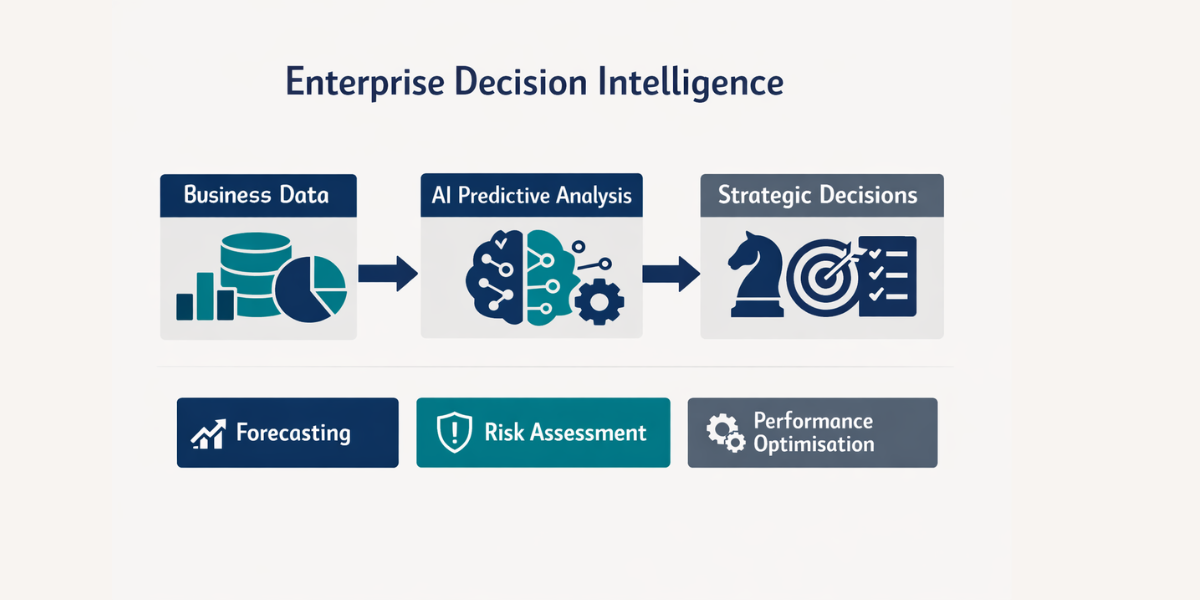
Many SMEs rely on periodic reports or dashboards to monitor performance. AI systems extend this capability by analysing trends and providing predictive insights.
Instead of simply describing what happened, AI can help forecast:
- sales performance
- operational demand
- inventory requirements
- financial trends
Harvard Business Review highlights that organisations integrating advanced analytics into decision processes gain significant competitive advantages in performance and agility.
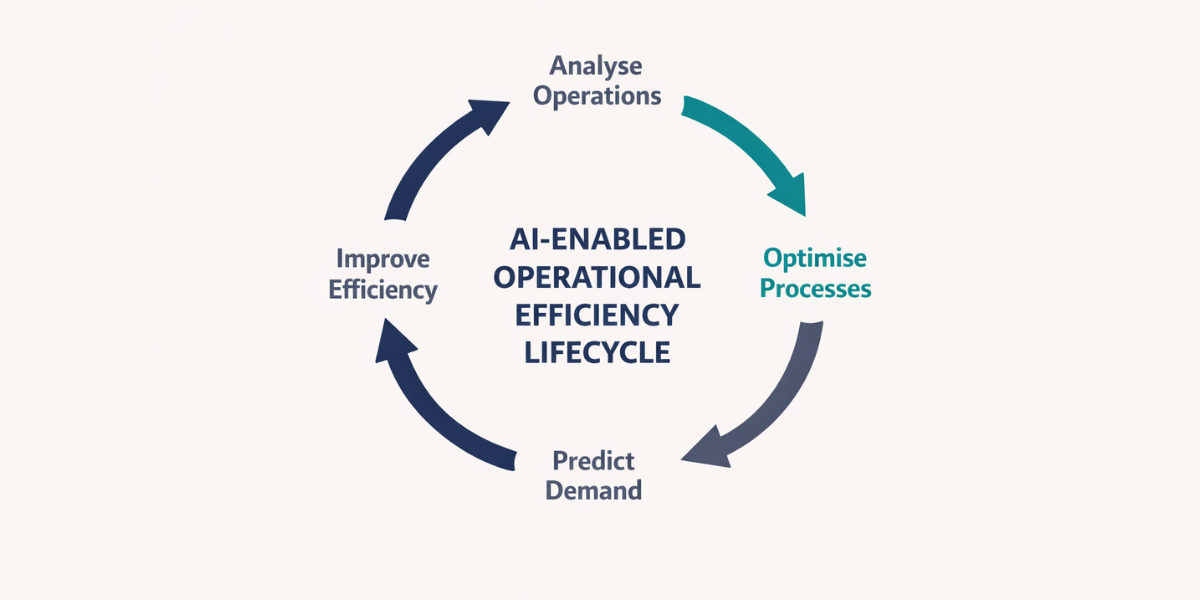
5. Increasing Operational Efficiency
Operational efficiency is often the primary driver for SME AI adoption.
AI can support operational improvements across areas such as:
- supply chain management
- workforce scheduling
- inventory forecasting
- operational risk monitoring
Gartner research highlights that AI-enabled decision support systems are becoming a core component of modern operational management.
The Strategic Consideration for SMEs
Despite the growing accessibility of AI tools, successful adoption requires more than simply deploying new software.
Organisations must also address:
- data quality
- governance
- integration with existing systems
- employee training
- cybersecurity considerations
The Strategic Opportunity for SMEs
Artificial intelligence is becoming an increasingly practical tool for SMEs seeking to improve productivity, enhance decision-making, and compete more effectively in digital markets.
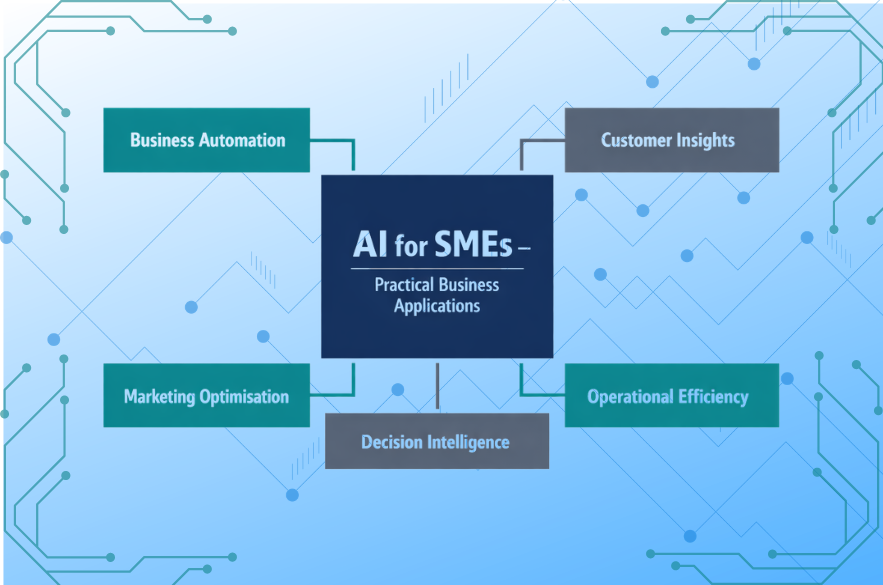
Today, AI applications are most impactful in areas such as:
- workflow automation
- customer insight analysis
- marketing optimisation
- predictive decision support
- operational efficiency
For many small businesses, the opportunity is not to build complex AI systems, but to integrate intelligent capabilities into everyday processes.
The organisations that approach AI strategically, focusing on business outcomes rather than technology hype are most likely to realise meaningful value.
Evaluating Where AI Can Deliver Real Business Value
Many SMEs recognise the potential of artificial intelligence but struggle to determine where it should be introduced within their operations. Implementing AI without a clear understanding of data readiness, operational workflows, and governance can create unnecessary complexity rather than meaningful value.
I-Net Software Solutions works with UK businesses to evaluate where AI can realistically improve operational efficiency, decision-making, and customer experience. Our structured AI readiness and data capability assessments help organisations identify practical opportunities while ensuring that governance, integration, and security considerations are addressed from the outset.
For businesses exploring how AI could support their next stage of growth, a structured evaluation often provides the clarity needed to move forward with confidence.
FAQs
- AI for SMEs: Practical Ways Small Businesses Can Use AI Today
- The Complete Guide to Ransomware Protection for UK Businesses (2026)
- What Should UK SMBs Expect from UI UX Design Services in 2026?
- A Practical Data Governance Framework for SMBs
- Why Passing Cybersecurity Compliance Doesn’t Mean You’re Secure

- Why Consistency Beats Creativity in Scalable UX