

Author name: Prithul Katuwal

News & Insights

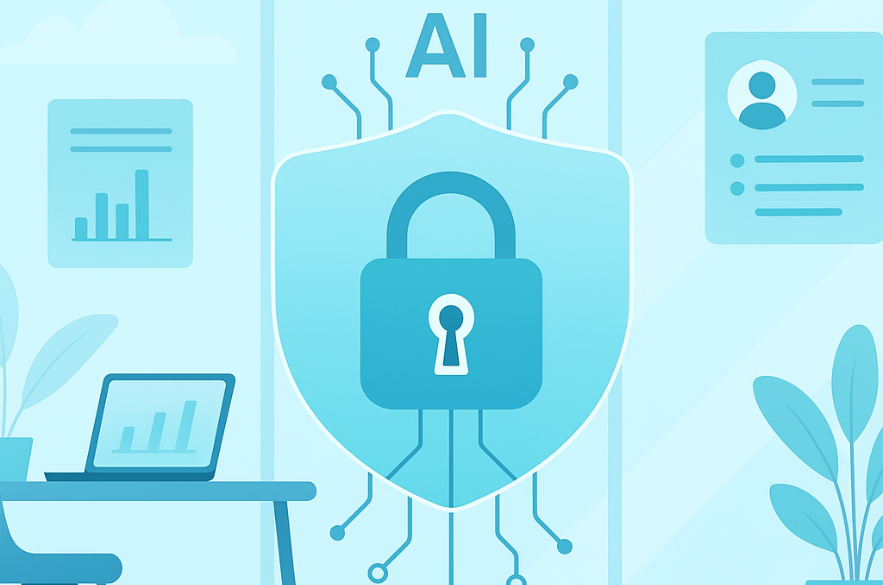
Can SMBs Trust AI with Customer Data? A Practical Framework

In the era of data‑driven business, AI tools have become ubiquitous from marketing automation to predictive analytics. Yet for small and medium‑sized businesses (SMBs) in the UK, the critical question isn’t “Can we use AI?” but “Can we trust AI with our customer data?” Trust, transparency and bias aren’t just ethical concerns, they are commercial imperatives. According to recent research, just 35% of UK SMEs are actively using AI technology, up from 25% in 2024, leaving many behind in data‑driven transformation. Without a structured framework to govern how AI handles customer data, SMBs risk reputational damage, regulatory breach and lost customer trust. 1. Understand the Trust Gap in AI and Customer Data SMBs face a dual challenge: adopting AI tools for competitive advantage, while simultaneously navigating customer concerns about data security and algorithmic integrity. A recent survey found that public trust in AI is a major barrier, with UK attitudes signalling that “without broad support, the government will struggle to implement the AI Opportunities Action Plan.” That same trust gap applies in business‑to‑customer relationships. If your customers believe their data is being mishandled or worse, that AI is making decisions invisibly, then adoption not only fails to yield ROI, it actively undermines brand reputation. Smaller companies may be particularly exposed: they often use third‑party AI platforms, may lack in‑house data governance expertise, and are more vulnerable to adversarial data events. The foundational UK Government study AI Activity in UK Businesses found that only ~15% of small firms (10‑49 employees) had adopted at least one defined AI technology by 2022. Thus, any trust framework must align adoption of AI with customer data governance, rather than treating them as separate concerns. 2. Four Dimensions of Trust: A Practical Framework To help your business evaluate whether AI tools are trustworthy with customer data, consider this four‑part framework: a) Data Governance & Lineage Before AI can act on customer data, SMBs must ensure the data is accurate, up‑to‑date and ethically sourced. A lack of clarity around data provenance or usage can expose firms to regulatory and reputational risk. The UK’s AI Playbook underscores the need for “data‑ready systems, information governance and audit records” as foundational to responsible AI adoption. Questions to ask: Where did this data come from? Who has modified it? How can we trace decisions made by AI? b) Transparency & Explainability Your customers and your internal stakeholders must understand how AI is using their data. Transparency means clear communication of purpose and processes. The British Chambers of Commerce emphasise UK SMEs “unlock AI activity” yet often lack clarity on how AI is deployed or what decisions it makes. Questions to ask: What decisions is the AI making? Can we explain those decisions to regulators or customers? Is bias being audited? c) Security & Privacy Controls AI models are only as safe as the data pipelines feeding them. Unauthorised access, shadow‑AI use by staff or unsecured third‑party integrations can all undermine trust. One industry piece warns that digital trust “is not just about cybersecurity… it’s about how your business handles customer data, communicates online, uses technology responsibly, and responds to risk and opportunity.” Questions to ask: Is data encrypted in‑motion and at‑rest? Are AI tools sandboxed and audited? Do we prevent unauthorised “shadow AI” usage by staff? d) Ethics & Bias Mitigation Even when data is secure and AI is transparent, biased decisions can erode trust. For SMBs using AI for marketing or customer service decisions, bias can manifest as unfair customer treatment or pricing discrimination. The UK government emphasises that enterprise AI use must adhere to “privacy, security, fairness and accuracy” standards. Questions to ask: Has the AI been audited for bias? Are there human‑in‑the‑loop controls? How do we monitor for disparate impact among customer segments? 3. Trust Framework in Action: Three Real‑World Applications Here are three areas where SMBs use AI with customer data and how the trust framework applies: i) Marketing Personalisation AI algorithms segment customers and personalise offers. If done without governance or transparency, customers may feel uncomfortable or exploited. SMBs should ensure campaigns are driven by clearly disclosed AI logic, and that customers have opt‑out options. ii) Customer Service Automation Chatbots and generative AI assist customer queries using past data. SMBs must secure conversation logs, ensure human oversight and prevent data leaks. iii) Sales Forecasting & Lead Scoring AI models predict high‑value leads using customer data. Transparency is essential when decisions dictate resource allocation or pricing. Several UK SMEs report efficiency advantages from AI models, but lack of control over data is cited as a major barrier. 4. Steps for SMBs to Build Trust‑worthy AI with Customer Data Trust as Competitive Advantage For many SMBs, AI is not the problem, but trust in AI with customer data is. A broken promise to customers, from opaque profiling, algorithmic bias or data misuse, can erode the very foundation of your business. By operationalising the four‑dimension framework of governance, transparency, security and ethics, your business can use AI to strengthen customer relationships, not risk them. According to data, SMBs that adopt AI thoughtfully are poised to gain an advantage, but only if trust is built right from the start. Next Step: Turn AI Trust Into Action AI doesn’t have to be a black box. With the right safeguards, transparency, bias checks, and data governance; your small business can embrace AI tools confidently and responsibly. Want to assess if your current tools meet today’s AI trust standards? Book a free 20-minute consultation with one of our data integrity advisors. Schedule Your AI Trust Consultation Related Read: Bridging the Gap Between People and AI in Everyday Business Workflows

News & Insights

Building a Cybersecurity Culture: What It Looks Like in Small Team

Cybersecurity is no longer the sole domain of IT administrators. For small businesses, where staff often juggle multiple roles, security culture isn’t about having bigger budgets, it’s about smarter behaviour. A resilient cybersecurity culture turns every employee into a firewall. According to the UK Government’s Cyber Security Breaches Survey 2025, 82% of small businesses experienced a phishing or social engineering attempt, yet only 29% had conducted a staff-wide awareness training in the past 12 months. This disconnect between risk and response highlights a key insight: technical controls without cultural reinforcement are destined to fail. What Is a Cybersecurity Culture, Really? Cybersecurity culture refers to the collective mindset, behaviours, and routines of your team that determine how securely your organisation operates on a day-to-day basis. It’s not just policy, it’s practice. In smaller teams, this manifests in: The European Union Agency for Cybersecurity (ENISA) defines it as the “attitudes, knowledge, assumptions, norms, and values of workforce members regarding cybersecurity”, making it a people issue as much as a technical one. Why It’s More Critical for Small Teams Than Corporates Larger enterprises often absorb breaches with layered defences and budget-heavy incident response. SMBs, on the other hand, are more vulnerable due to: A report by Eurostat (2024) revealed that over 50% of data breaches in businesses with fewer than 50 employees were due to avoidable human error, not sophisticated hacking source: Eurostat What a Strong Security Culture Looks Like in Practice 1. Security Onboarding as Standard Every new hire, regardless of role, receives a security briefing tailored to their tools and data access. It includes: 2. Secure-by-Default Tools Using tools that encourage security best practices without friction: 2FA by default, role-based access, encrypted messaging (e.g. Signal or MS Teams with compliance layers). 3. “Psychological Safety” for Reporting Employees aren’t afraid to report mistakes, whether clicking a suspicious link or misconfiguring access. Incident response starts with open communication, not blame. 4. Visual Reminders, Not Just Policies Posters near workstations, pop-up tips in tools, and microlearning modules help maintain awareness. Behavioural reinforcement beats once-a-year training. Common Mistakes That Undermine Culture Even well-meaning SMBs sabotage their own efforts by: According to the European Union Agency for Cybersecurity’s Threat Landscape Report 2025, third-party vendors were linked to 17% of cyber incidents reported by SMEs, up from 11% in 2023. Case Example: A Small Legal Firm Adopts Cyber Culture In early 2025, a 12-person legal firm in Bristol faced an internal scare: a paralegal accidentally opened a malware-laced attachment disguised as a case file. No controls were bypassed, but the incident triggered a full review. Actions taken: Outcome: Within 3 months, phishing susceptibility dropped by 73% and a Cyber Essentials Plus certification was obtained, improving client trust and contract eligibility. Cybersecurity Culture Is a Competitive Advantage Small teams that embrace a security-first culture reduce breach risk, build customer trust, and even gain new business through compliance-readiness. And it’s not about fear. It’s about empowerment. SMBs that thrive in 2025 will be those where cybersecurity isn’t just a policy, it’s a shared, lived practice. Ready to See Where You Stand? At I‑NET Software Solutions, we partner with small business leaders to embed cybersecurity culture across teams, so every employee becomes a security-strength, not a weak link. Want to assess your team’s readiness and close the culture gap? Book a Cybersecurity Culture Assessment with our experts today. Recommended Read: If you found this article useful, check out our previous post on the evolving threat landscape: “Phishing 3.0: Advanced Email Scams Hitting UK Small Businesses in 2025”, it examines how modern multi‑vector attacks exploit cultural weaknesses in organisations just like yours.

Scroll to Top