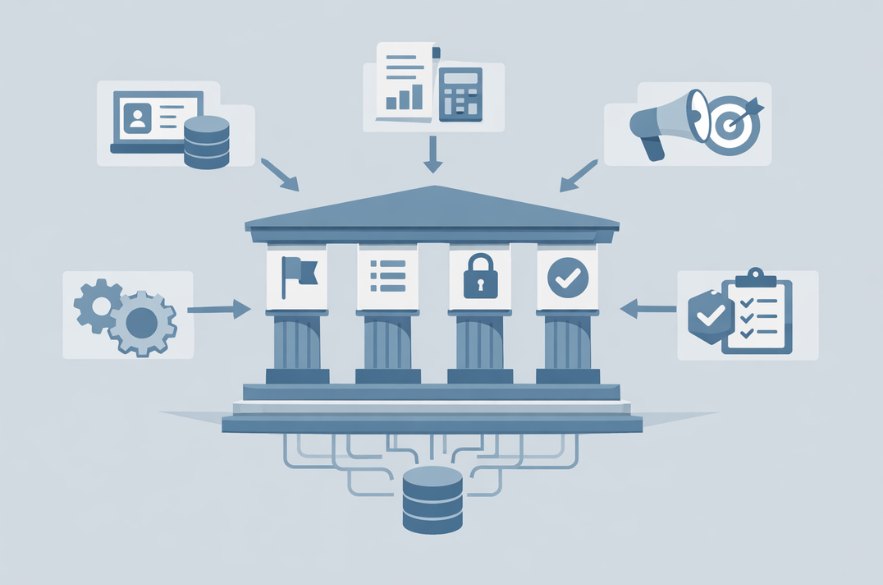

The threat landscape has shifted from simple malware to multi-stage attacks involving:
- phishing and credential compromise
- lateral movement across systems
- data exfiltration
- ransomware deployment
The Verizon Data Breach Investigations Report consistently shows that human error, stolen credentials, and system vulnerabilities remain primary entry points for attackers. This means protection must go beyond blocking known threats. It must detect and respond to unknown behaviour.
What Antivirus Was Designed to Do, And Where It Falls Short Today
Traditional antivirus was built for a different era.
Signature-Based Detection
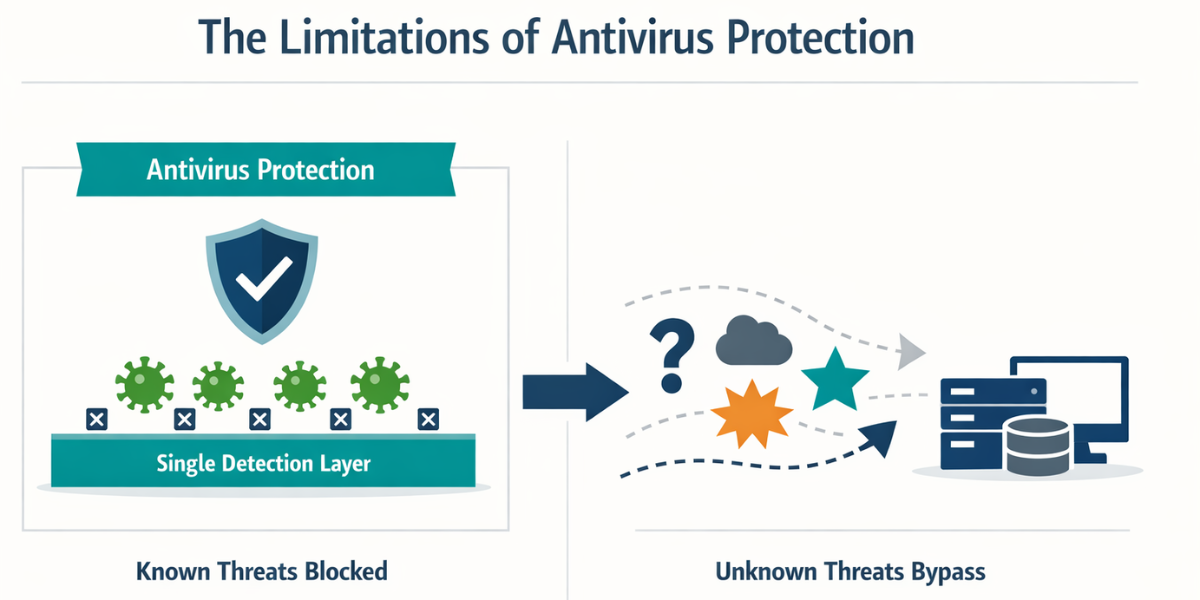
Antivirus tools identify threats by matching files against a database of known malware signatures. This works well for previously identified threats but struggles with new or evolving attack methods.
The Problem With Modern Threats
Modern cyber attacks often use:
- fileless malware
- encrypted payloads
- legitimate system tools for malicious purposes
These techniques do not match known signatures.
Reactive Security
Antivirus acts after a threat is recognised. By that point, damage may already be underway. This reactive model is increasingly insufficient in a threat environment that evolves in real time.
What Endpoint Security Actually Includes
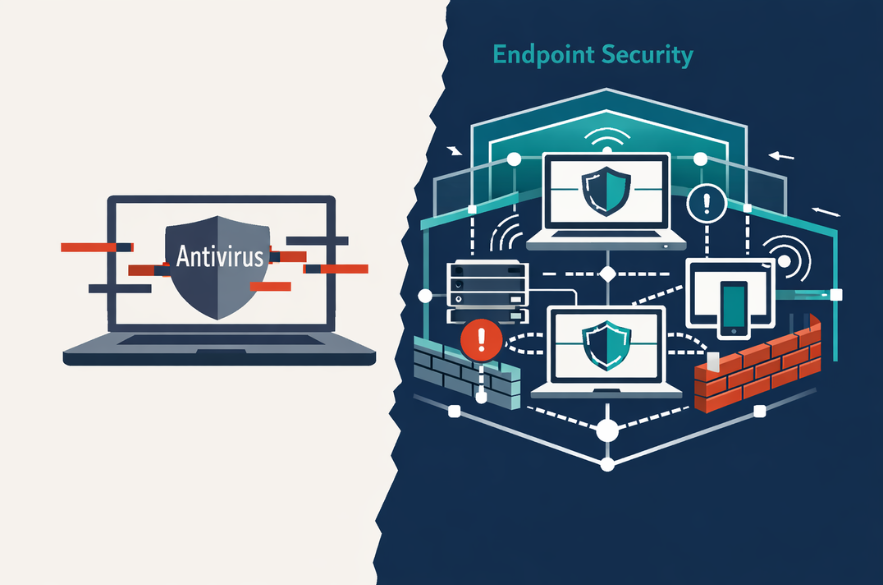
Endpoint security represents a broader, more modern approach. It combines prevention, detection, and response into a single operational framework.
Endpoint Protection vs Detection
Endpoint protection includes baseline safeguards, but modern systems extend this with continuous monitoring.
Role of EDR (Endpoint Detection and Response)
EDR tools analyse behaviour across devices to identify suspicious activity, even when no known malware signature exists.
Continuous Monitoring
Instead of waiting for known threats, endpoint security watches for anomalies, unusual behaviour, and system changes.
Endpoint Security vs Antivirus: The Core Differences
The distinction is not incremental. It is fundamental.
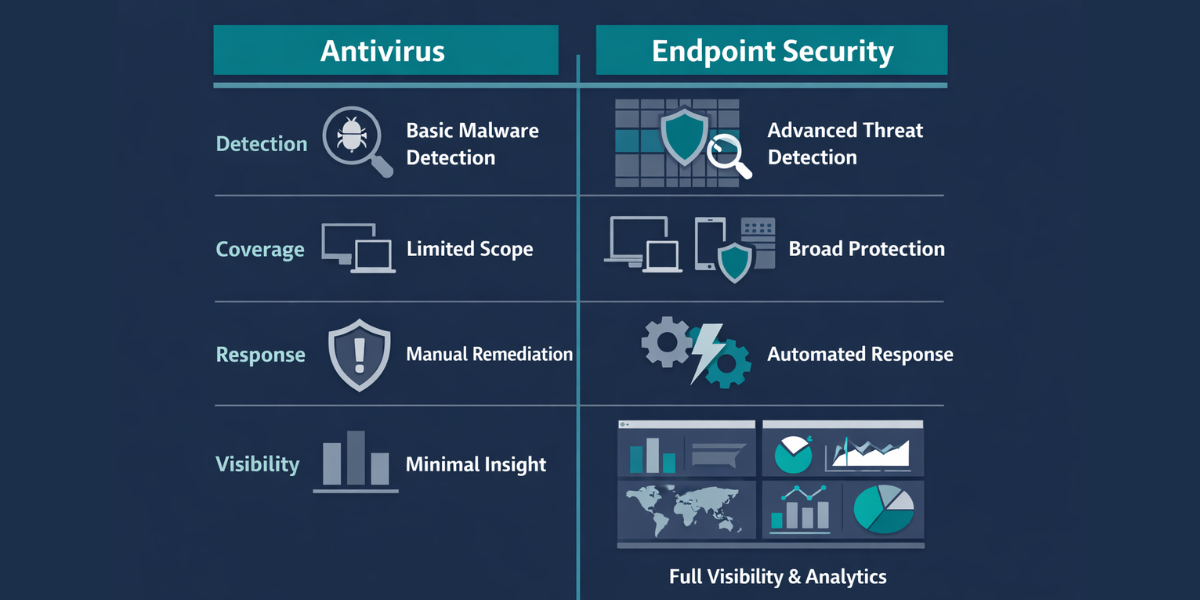
| Capability | Antivirus | Endpoint Security |
|---|---|---|
| Detection method | Signature-based | Behavioural + AI-driven |
| Threat coverage | Known threats | Known + unknown threats |
| Response capability | Limited | Active response & containment |
| Visibility | Device-level | Network-wide visibility |
| Protection model | Reactive | Proactive + reactive |
This is why the shift toward endpoint security is accelerating.
Why Antivirus Alone Is No Longer Enough for Businesses
The evolution of threats has outpaced traditional protection. The National Cyber Security Centre highlights ransomware as one of the most significant risks facing organisations, often involving techniques that bypass simple detection tools.
Modern risks include:
- credential theft through phishing
- ransomware-as-a-service models
- insider threats
- exploitation of unpatched systems
These require detection, visibility, and response, not just blocking
Where Endpoint Security Delivers Real Business Value
Endpoint security is not just a technical upgrade. It has operational impact.
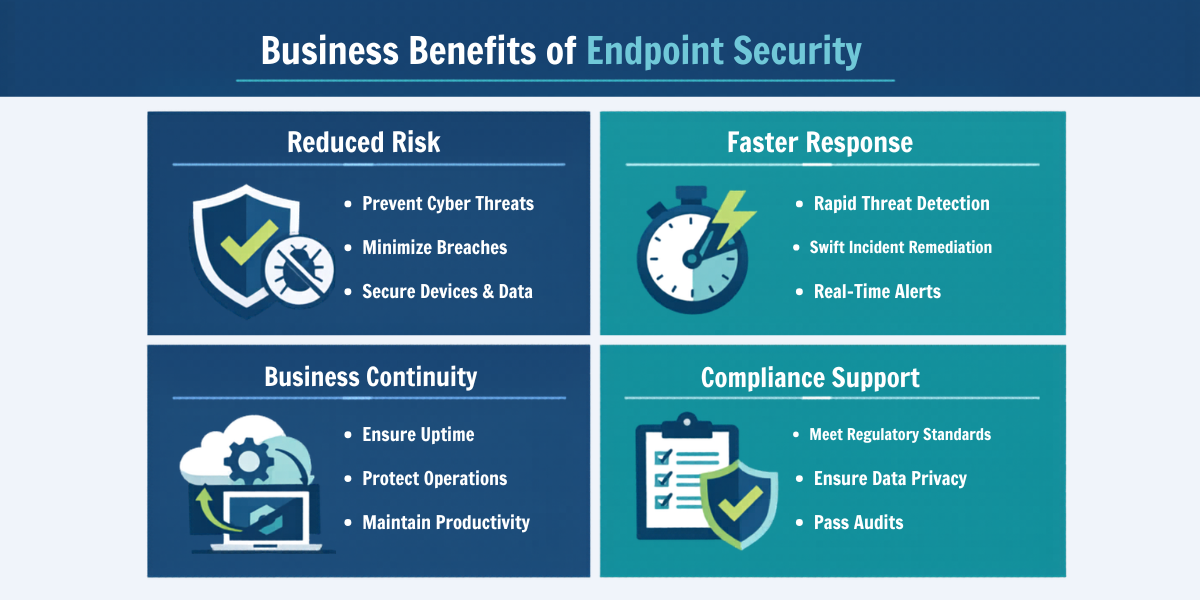
Reduced Breach Risk
Faster detection limits the spread of attacks.
Faster Incident Response
Automated containment reduces downtime.
Operational Continuity
Systems remain functional during attempted attacks.
Compliance Alignment
Supports UK GDPR principles of security by design
Cyber Insurance Readiness
Insurers increasingly expect advanced endpoint controls.
Do Businesses Need Both Endpoint Security and Antivirus?
This is a common misunderstanding. Modern endpoint security platforms often include antivirus capabilities as one layer within a broader system. The real shift is not replacing antivirus, it is moving beyond it.
Businesses are no longer choosing between the two. They are choosing whether to operate with:
- single-layer protection
or - layered, intelligent security
What UK SMBs Should Look for in Endpoint Security Solutions
Decision-makers should focus on capability, not branding.
Key considerations include:
- real-time visibility across devices
- behavioural threat detection
- automated response mechanisms
- integration with existing systems
- scalability as the business grows
The goal is not simply protection, it is control and awareness.
The Strategic Risk of Staying With Antivirus Alone
The risk is not immediate failure. It is delayed detection.
By the time a threat is visible, it may already have:
- accessed sensitive data
- moved across systems
- disrupted operations
This creates a gap between perceived security and actual resilience.
What This Means for Business Leaders
The shift from antivirus to endpoint security reflects a broader change in how cyber risk is managed. Security is no longer about blocking threats at the edge. It is about understanding activity across the organisation and responding quickly when something goes wrong.
For SMEs, this is not about adopting enterprise complexity. It is about adopting modern protection that reflects modern risk.
Understanding Your Current Level of Protection
Many organisations assume their current setup is sufficient because no major incident has occurred.
A more useful question is whether your current systems can:
- detect unknown threats
- respond in real time
- provide visibility across devices
- support compliance expectations
I-Net Software Solutions works with UK businesses to assess how endpoint security is currently structured and where gaps may exist between perceived protection and actual capability.
For organisations navigating increasing cyber risk, clarity often becomes the most valuable starting point.
FAQs
Recommended Read
- Endpoint Security vs Antivirus: What Actually Protects Your Business Today?
- What Good UX Governance Looks Like in a Growing Business

- AI for SMEs: Practical Ways Small Businesses Can Use AI Today
- The Complete Guide to Ransomware Protection for UK Businesses (2026)
- What Should UK SMBs Expect from UI UX Design Services in 2026?
- A Practical Data Governance Framework for SMBs